
River North
Glass towers and gallery walls hide the ctOS eyes watching every step you take.

Tdorante10 · CC BY-SA 4.0
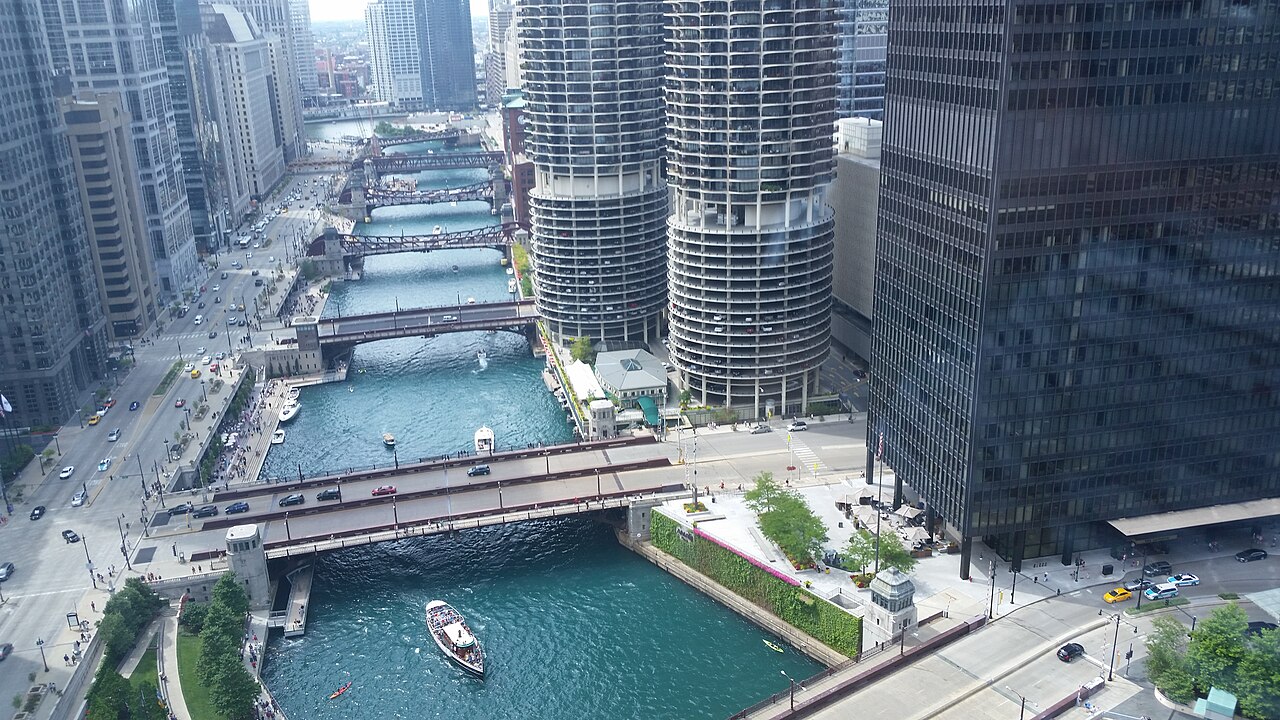
River North is one of the playable districts in Watch Dogs (2014), the open-world hacking game set in a fictionalized version of Chicago, Illinois. Modeled on the real River North neighborhood north of the Chicago River, it serves as a dense, upscale urban zone where the protagonist Aiden Pearce and the hacker collective DedSec operate against the city's all-seeing ctOS surveillance network. As a downtown-adjacent district, River North in the game blends residential high-rises, gallery-lined streets, and commercial corridors, providing a contrast to the more industrial or park-heavy areas of the map. It functions as a hub for early-to-mid game activities, side missions, and ctOS infrastructure that players can hack, exploit, or destroy as part of the broader narrative.
- Setting
- Chicago, Illinois (fictionalized)
- Game
- Watch Dogs (2014)
- Developer
- Ubisoft Montreal
- Type
- Playable open-world district
- Real-world basis
- River North neighborhood, Chicago
- Protagonist
- Aiden Pearce
- Faction of interest
- DedSec
Verified Timeline
Lore & Background
In the world of Watch Dogs, Chicago has been rebuilt around ctOS, a centralized operating system that monitors traffic, communications, and citizen behavior through a web of nodes embedded in infrastructure. River North, positioned just north of the river's main channel, is a district where the surveillance apparatus feels most intimate: camera arrays on every gallery entrance, data-loggers in residential lobbies, and traffic-control nodes at the river crossings. The neighborhood's real-world identity as a cultural and nightlife district translates in-game into a dense mesh of hackable points and civilian foot traffic that Aiden must navigate or redirect. DedSec's early operations in the city often route through or near River North, treating its commercial and residential blocks as both cover and target. The district's mix of upscale apartments, art spaces, and bars creates a social texture that the game uses to ground its otherwise systemic critique of mass surveillance. NPCs here carry personal routines—galleries open and close, bars fill in the evening—giving the player a sense of a city that breathes behind the ctOS overlay. Narratively, River North sits at the intersection of the city's power corridors.
In Their Own Story
Rain streaks the glass of a gallery on the north side of the river. Aiden crouches behind a fire escape, his phone screen casting a pale blue glow across his knuckles. Below, a ctOS node hums behind a maintenance panel on the sidewalk, its indicator blinking a slow, patient green. He doesn't rush. The bar across the street is filling up for a Friday crowd; the gallery's last visitor is still arguing with the docent about a Rothko. He has time. He jacks in, watches the data stream peel open like a curtain, and lets the node go dark. The green light dies. Somewhere in the Loop, a traffic signal stutters, resets, and no one notices. Aiden folds his phone shut and drops to the wet pavement, already looking for the next node.
Reader's Guide
City: Chicago, Illinois. District: River North, the upscale neighborhood north of the Chicago River's main channel. Visually, River North in Watch Dogs reads as a dense, glass-and-brick downtown fringe: mid-rise residential towers, narrow gallery-lined blocks, and river-side walkways, all rendered in the game's muted, rain-washed palette with the occasional warm glow of a bar or studio window. Tonal identity leans toward quiet urbanity rather than the industrial grit of the south side. Key points of interest include ctOS surveillance nodes embedded in street infrastructure, hackable traffic cameras at river crossings, and civilian hotspots (galleries, bars, residential lobbies) that generate side-activity and DedSec bounties. Story beats anchored in or near River North include early DedSec operations and ctOS-disruption tasks that introduce the player to the hacking loop before the narrative escalates toward the city's core systems. In-game media: The Watch Dogs radio and in-world media ecosystem (news feeds, broadcast interruptions) plays a supporting role in River North, with ctOS-related broadcasts and DedSec propaganda surfacing on local channels as the player's influence grows. These media elements are tied to the broader city state rather than exclusive to this district, but the district's dense commercial blocks give them a more immediate, street-level presence.
Did You Know?
- River North in the game is based on a real Chicago neighborhood known for its art galleries, nightlife, and high-rise residential buildings north of the river.
- The district's position between the river and the downtown core makes it a natural transit zone in the game's open-world map, linking residential and commercial gameplay loops.
- ctOS nodes in Watch Dogs are embedded in everyday infrastructure—streetlights, traffic signals, and building systems—so River North's dense commercial grid means a high concentration of hackable points per block.
- The game's surveillance aesthetic treats even quiet gallery streets as monitored spaces, reinforcing the theme that ctOS leaves no neighborhood, however small, outside its reach.
A Historic First in American Television
Reservation Dogs carved out a landmark place in the landscape of American scripted television by becoming the first series to employ an entirely Native American writing and directing team, paired with a cast and crew that was almost exclusively Indigenous North American. This commitment to authentic storytelling extended behind the camera as well: the first season was shot entirely within Oklahoma, a milestone that had never before been achieved for a scripted series. The show, developed by Sterlin Harjo alongside Taika Waititi for FX Productions, debuted on Hulu under the FX on Hulu banner on August 9, 2021, a date deliberately aligned with the International Day of the World's Indigenous Peoples. That timing underscored the production's intent to center Indigenous voices not as a token gesture but as the structural foundation of the entire creative process. From the writers' room to the set, the series represented a deliberate and unprecedented reclamation of narrative authority for Native storytellers in mainstream American media.
Three Seasons of Grief, Growth, and Generational Echoes
At its core, the series tracks four Indigenous teenagers in a small Muscogee Nation town in rural Oklahoma, who fill their days with petty crime and the constant effort to outrun it. The emotional engine driving all three seasons is the suicide of their friend Daniel, who died a year before the story begins and who had dreamed of making it to California. In the first season, the group wrestles with his absence while contemplating whether to fulfill his dream themselves. By the second season, the California journey has not delivered the liberation they hoped for; instead, old bonds fray, financial pressures mount, and the characters confront the unglamorous realities of adult responsibility while still processing their grief. The third and final season, which premiered in August 2023 and concluded in September of that year, shifts its lens toward the community's elders. It draws deliberate parallels between the Rez Dogs and the younger versions of their aunts, uncles, and grandparents, revealing how the choices and histories of one generation ripple into the next.
A Consensus of Critical Praise
The critical reception of Reservation Dogs was nothing short of extraordinary, accumulating accolades across virtually every major American television award circuit. The series earned two Peabody Awards and two Independent Spirit Awards, cementing its status as a work of both artistic and cultural significance. On the Emmy front, it received five Primetime Emmy nominations, including for Outstanding Comedy Series and for Outstanding Lead Actor in a Comedy Series, a nod to D'Pharaoh Woon-A-Tai's portrayal of Bear. Additional recognition included a Golden Globe nomination, six Television Critics Association Awards, and nine Critics' Choice Television Awards. Perhaps most telling of its sustained cultural impact was the American Film Institute's decision to name the series one of its ten best television programs in three consecutive years, 2021, 2022, and 2023, a rare feat that speaks to the show's ability to maintain relevance and resonance across its entire run rather than relying on a single breakout season.
A Living Community of Characters
The world of the show is populated by a rich ensemble that extends well beyond the four central teenagers. Elora, the most driven of the group, carries the weight of having lost her mother as a toddler. Bear, haunted by visions of a spirit guide named Spirit Knifeman, longs for a relationship with his absent father while remaining close to his single mother Rita, who works at the local Indian Health Service clinic. Cheese takes a more easygoing path, living with his cousin uncle Charley and forming unexpected bonds with adult figures around him. Willie Jack, deeply close to her parents, is the one most directly shattered by her cousin Daniel's death. Surrounding them is a vivid cast: the patient and superstitious Officer Big, the hermit Uncle Brownie who once dreamed of opening a dojo, the NDN mafia led by Jackie, and the Pawnee-Choctaw rap duo Mose and Mekko who serve as the community's roving gossip network. Even the non-Native character Kenny Boy, who constantly butchers Indigenous languages, functions as a pointed commentary on cultural appropriation.
Gallery
Frequently Asked Questions
What is River North in Watch Dogs?
River North is a playable open-world district in Watch Dogs (2014) by Ubisoft Montreal, modeled on the real River North neighborhood in Chicago. It functions as a dense, upscale urban zone where Aiden Pearce and the DedSec collective carry out hacking operations against the ctOS surveillance network.
Where is River North located on the Watch Dogs map?
The district sits in the downtown-adjacent core of the fictionalized Chicago, positioned just north of the Chicago River. Its central placement makes it a natural staging area that connects to surrounding districts and hosts a high concentration of ctOS infrastructure.
What does River North look like in Watch Dogs?
The area is defined by glass high-rise towers, gallery-lined streets, and commercial corridors that give it a polished, residential-commercial character. This upscale aesthetic stands in deliberate contrast to the more industrial or park-heavy districts elsewhere in the game's city.
What kind of gameplay happens in River North?
Players tackle story missions, side activities, and free-roam hacking objectives throughout the district's dense urban layout. The mix of high-rises, commercial zones, and gallery districts provides varied vantage points and infiltration routes for Aiden's ctOS takedowns.
Why is River North important to the Watch Dogs story?
As a core operational zone for DedSec, River North is where much of Aiden Pearce's campaign against ctOS and the city's surveillance apparatus unfolds. Its upscale, heavily monitored environment underscores the game's central tension between gleaming modern architecture and the all-seeing digital eyes watching every corner.
More in World & Locations
Elsewhere in the Watch Dogs universe
Spotted an error? Know more?
This is a living reference — every entry is fact-audited, and reader corrections feed straight into our audit queue. Suggest an edit · See this site's audit record